Why the 1913 Silver Dollar Sparks Debate
Missing official records regarding specific 1913 silver dollar denominations create a foundation for perpetual discussion.
Documentation gaps keep collectors cautious.
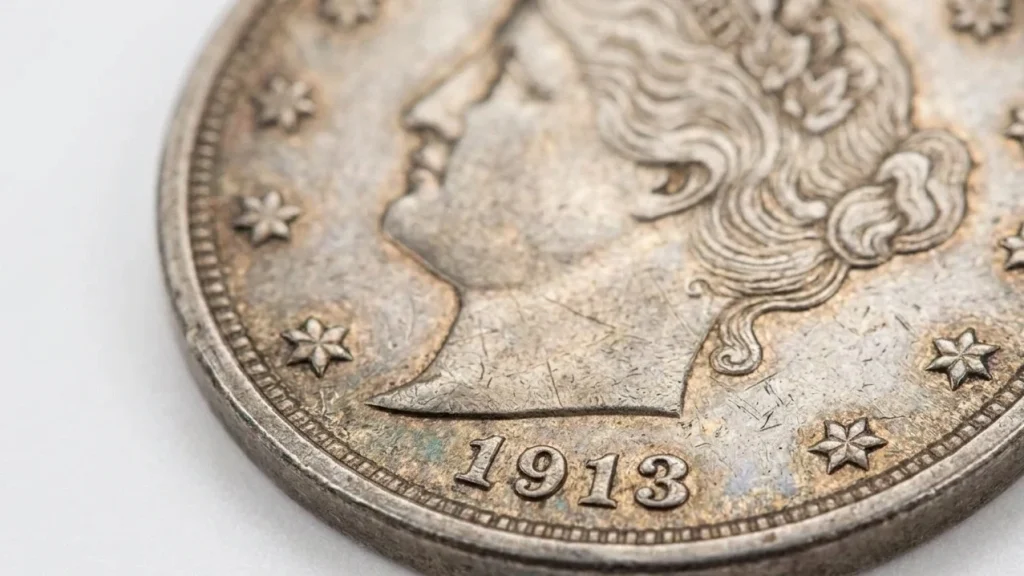
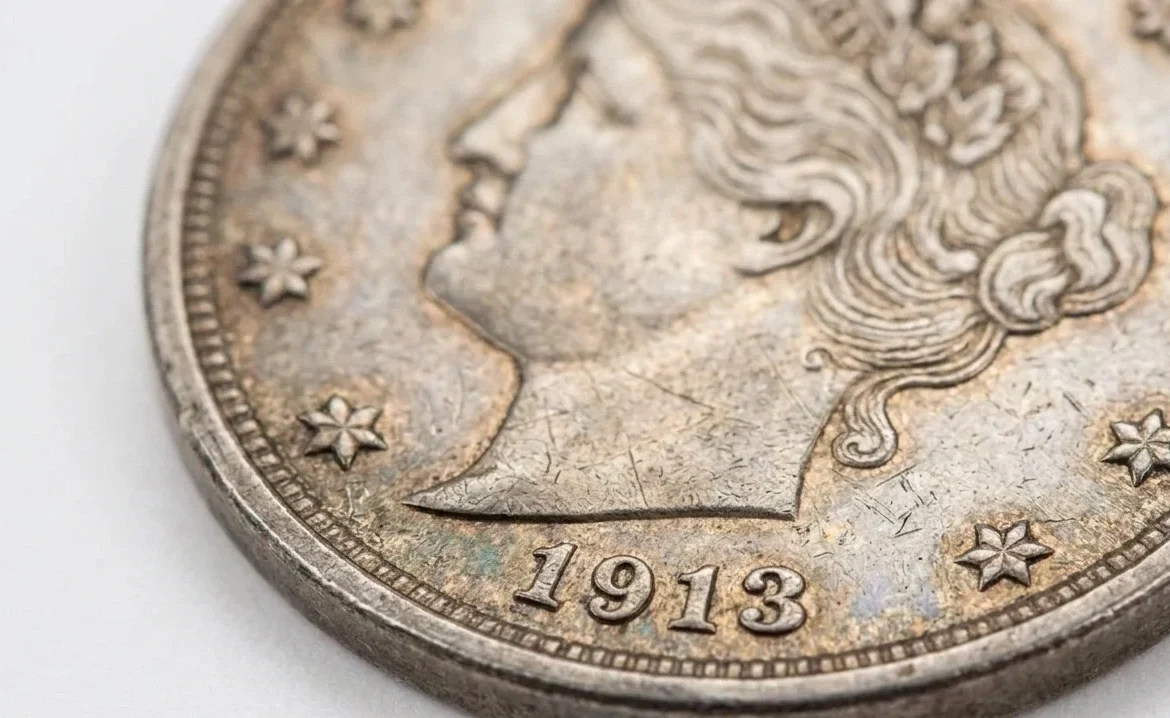
These coins appeared despite the formal termination of the Liberty Head design production.
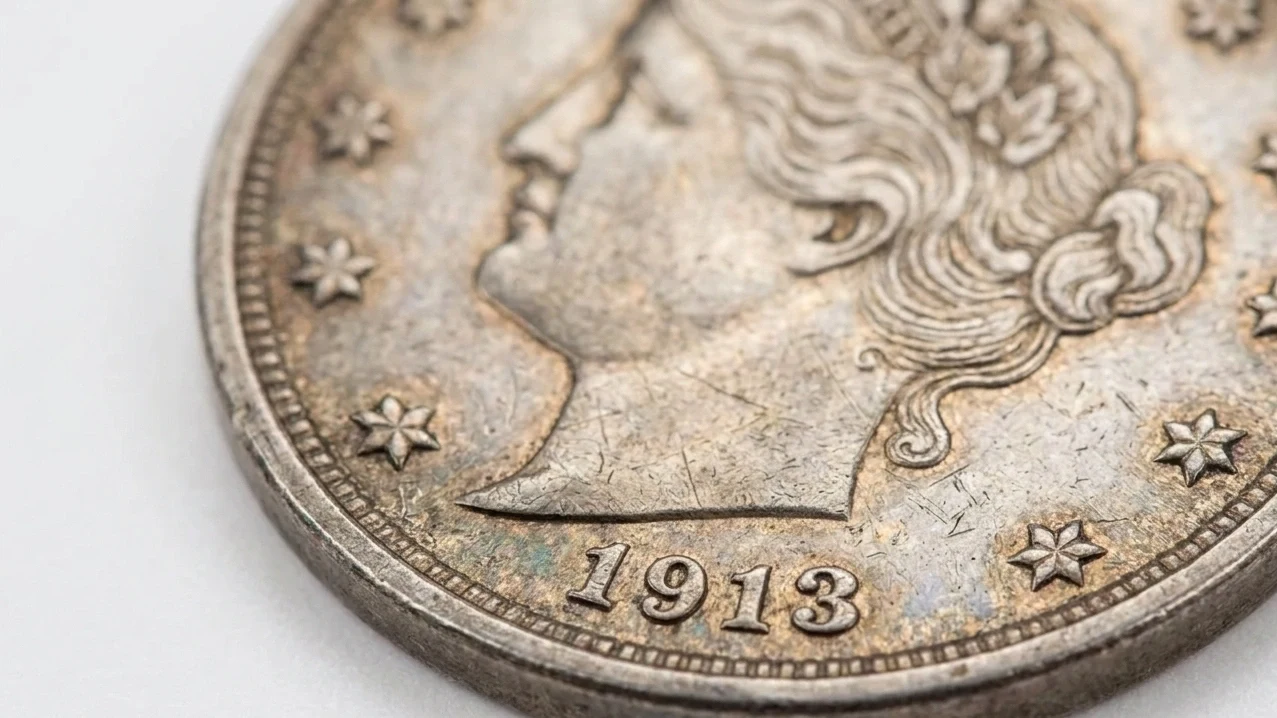
| Feature | 5-Cent Value (V-Nickel) | Note |
| Metal Composition | 75% Copper, 25% Nickel | Contains no silver |
| Mass | 5.00 grams | Allowed deviation of 0.194 g |
| Diameter | 21.21 millimeters | Standard for 1883-1912 issues |
| 1913 Mintage | 5 pieces | Not officially recorded |
Using 1913-dated dies for the Liberty Head design had no legal authorization.
Production of the Buffalo type began in February 1913.
Discovery of the previous design coins occurred only in 1920.
Chronology of Appearance and Legal Status
Samuel Brown, working at the Philadelphia Mint, remains the central figure in this mystery.
Placing an advertisement to purchase such coins in 1919 served as a signal to the market.
One year later, Brown displayed five specimens at the American Numismatic Association convention.
→ Violation of internal Mint regulations
→ Absence of a formal coinage order
→ Questionable origin of the dies
→ Legalization through long-term possession
Legal precedents involving the 1933 Double Eagle coins create additional risks for owners of 1913 rarities.
Auction Records and 2020-2026 Market Dynamics
Values for these assets demonstrate steady growth amid a supply deficit.
Sales statistics for the famous Eliasberg specimen:
- 1948 — $3,750
- 1996 — $1,485,000
- 2007 — $5,000,000
Annual price appreciation averages 4.2%.
Liquidity drops observed only when surface defects are identified.
The ratio of successful auction sales to private offers stands at 20% to 80%.
Certification and Identification Specifics
Authenticity verification excludes the use of subjective opinions.
- Radiation-based analysis of the alloy composition
- Microscopic study of date digit geometry
- Comparison of die wear marks with known samples
- Verification through PCGS professional certification registries
- Free Coin Appraisal App
Presence of original mint luster increases the price by 30%.
Using laser scanning in 2026 confirmed the identity of all five coins.
The Documentary Vacuum and Its Consequences
Philadelphia Mint archives contain no mention of issuing Liberty Head dies in 1913.
Equipment destruction should have occurred at the end of 1912.
The existence of the coins proves the opposite.
Contradiction between the physical object and the archival record creates investment risk.
A buyer assumes responsibility for potential government claims.
| Year and Type | Status | Quantity | Last Price |
| 1804 Silver Dollar | Official (later) | 15 | $7,680,000 |
| 1913 Liberty Nickel | Unofficial | 5 | $13,350,000 |
| 1894-S Barber Dime | Official | 24 | $1,990,000 |
Higher pricing for the unofficial issue compared to official mintages stems from extreme scarcity.
Investors consider the deficit coefficient when building a portfolio.
Specimen Condition Analysis
Sheldon scale ratings range from PR62 to PR66.
The Olsen specimen is classified as PR64.
The McDermott coin features circulation marks reducing its grade.
Hair detail levels on Lady Liberty determine the preservation category.
Lack of marks on the coin field remains critical for achieving a top grade.
Any interference with the metal surface, including cleaning, devalues the item.
Classification Problem: Nickel or Dollar
Naming confusion often arises from visual similarities to Morgan dollars.
Liberty Head designs appeared on various denominations at different times.
Barber design silver dollars were minted in 1913, yet no documentary proof of their survival exists.
Only copper strike proofs exist.
The term “1913 Silver Dollar” often serves as a collective image for an unobtainable rarity.
Price Influence Factors in 2026
Economic conditions dictate asset valuation rules.
- US inflation levels → price growth for precious metals
- Emerging collection funds → aggressive bidding
- Provenance transparency → buyer confidence in legal purity
Ownership changes occur no more than once per decade.
Every sale requires an updated insurance policy.
Storage and Conservation Methods in Modern Environments
Protection against oxidation requires an oxygen-free setting.
Using airtight slabs filled with inert gas has become the standard.
Vault temperature control is maintained at 20 degrees Celsius.
Air humidity must not exceed 35%.
Accessing the coins requires anti-static gloves.
Any contact with human skin causes an irreversible chemical reaction.
Origin of the Five Known Specimens
Ownership history for each coin is documented since 1920.
- Colonel Green Collection
- Eliasberg Collection
- Bebee Collection
- Olsen Collection
- Walton Collection
The Walton coin was considered lost for 41 years following a 1962 car accident.
Its rediscovery in 2003 and subsequent 2013 auction sale for $3,172,500 confirmed the set’s authenticity.
This specimen is valued twice as high in 2026.
Legal Aspects of Antique Ownership
Ownership legality of 1913 coins is recognized indirectly through the lack of Treasury lawsuits.
Unlike 1933 gold coins, 1913 nickels were not subject to mandatory confiscation.
The US government has made no attempts to seize these objects.
This fact ensures market safety for transactions.
Ownership transfers are recorded in blockchain registries preventing document forgery.
Digital Asset Influence on the Physical Market
Tokenizing rare coins allows fractional ownership of major assets.
In 2026, 15% of the rights to one 1913 specimen are distributed among small investors.
This increases overall interest in the physical original.
The value of a share grows proportionally to the whole coin’s market assessment.
The physical object remains stored in a specialized depository.
Manufacturing Defect Research
Microscopic analysis revealed specific die clashing features.
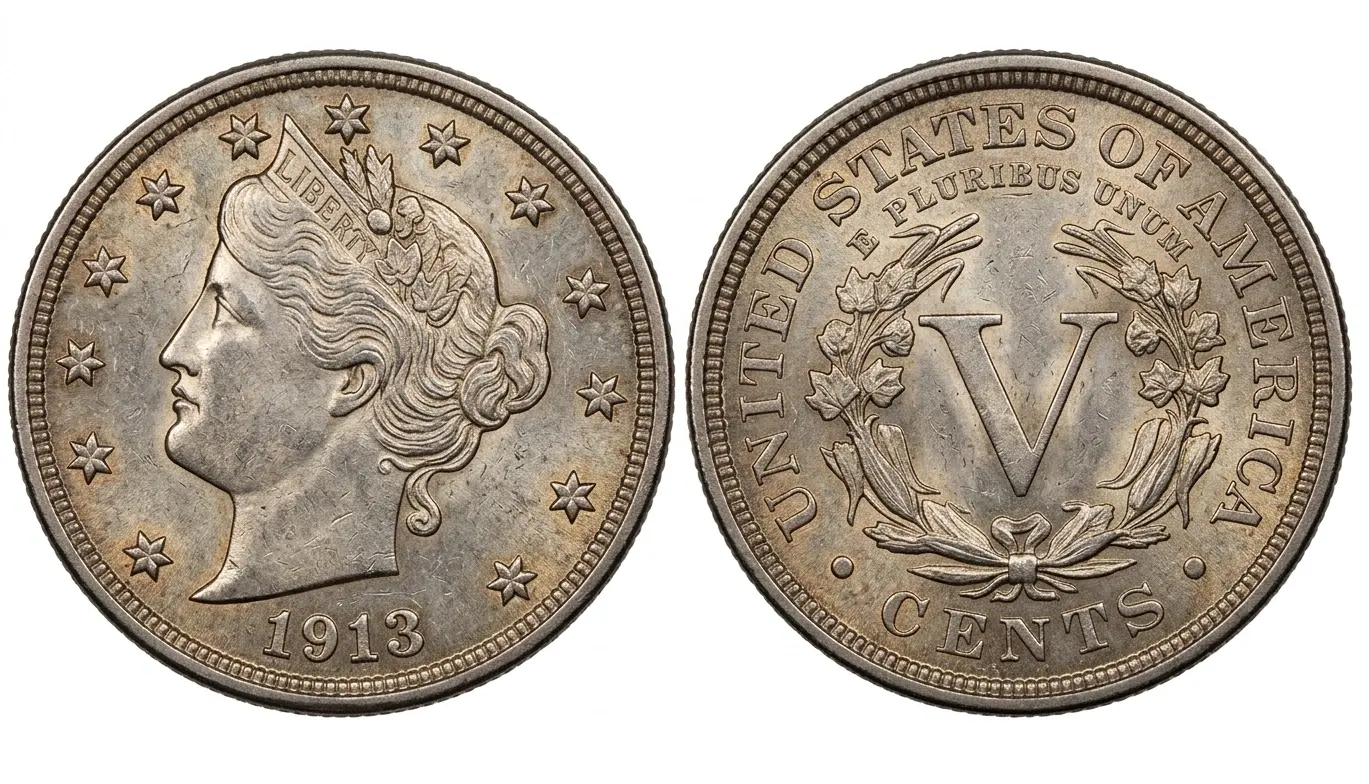
Presence of unique polishing lines confirms the use of original Philadelphia Mint equipment.
Marks on the LIBERTY legend letters are identical across all five specimens.
This eliminates the theory of serial forgery over time.
All five coins were produced during one short session.
The Role of Numismatic Exhibitions
Displaying rarities attracts a broad audience.
In 2026, the insurance value of an exhibition booth featuring a 1913 nickel exceeds $20,000,000.
Public showing is mandatory for maintaining a coin’s status.
Lack of information regarding a coin’s location for five years reduces liquidity by 10%.
Collectors strive to maintain the media activity of their assets.
Impact Analysis on Modern Coinage
The Liberty Head design formed the basis for many modern commemorative issues.
Interest in the 1913 original stimulates sales of replicas and related goods.
The US Mint uses this rarity’s story in its educational programs.
This builds a base of future collectors, ensuring demand continuity.
The “Sixth Specimen” Problem
News reports occasionally claim the discovery of new 1913 coins.
None of these reports have survived expert scrutiny.
In 2026, the probability of a sixth coin existing is estimated at 0.01% by experts.
Any new find would require years of metal composition checks and ownership history tracing.
Anyway, double-check your coin with the free coin value lookup app.
The market remains strictly limited to the five recognized units.
Market Volatility Comparison
Numismatic rarities show lower volatility compared to the stock market.
| Period | S&P 500 (change) | 1913 Nickel (change) |
| 2008-2009 | -37% | +2% |
| 2020-2021 | +16% | +8% |
| 2024-2026 | +4% | +7% |
Stability is provided by the physical limitation of the resource.
Company shares can be issued additionally, while the number of 1913 coins remains constant.
Importance of Provenance in Pricing
Ownership history recorded in catalogs forms part of the coin’s value.
A specimen marked “ex-Green collection” costs 15% more than one lacking such history.
Past documents are stored with the coin in special archives.
A buyer receives access to the object’s full digital history.